Monday, August 11, 2008

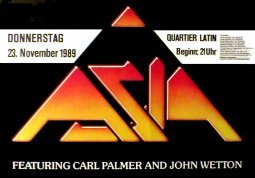
ASIA Latin Quartier 23rd November 1989 Music Poster


Suzanne Marie Mahoney was born in San Bruno, California, on 16 October 1946; she is one of four children. In 1986, she wrote an autobiography entitled Keeping Secrets, in which detailed the physical abuse she suffered at the hands of her father as a child, which was later made into a TV movie.

As a child she was diagnosed as having dyslexia and was considered a poor academic student. She did, however, perform well in the theater program at the school, eventually, attending college with a music scholarship.

Unfortunately, after a short time at college, she became pregnant and married her boyfriend Bruce Somers, the marriage ended in 1967 after two years. As a single mother trying to make ends meet Suzanne used her looks to take up modeling, she was quickly snapped up by a game show hosted by Alan Hamel, who later became her second husband.

During the early 70s, she found minor roles in TV shows and movies. Eventually, winning the role that would make her a star, as the bubbly blond Chrissy on the hit TV comedy show Three's Company opposite John Ritter. She has stated in the past that the character was based on the wife of famous entertainer, Dick Clark.

She starred in the show for four seasons, then was apparently 'let go' after asking for a raise. During the early 80s she performed on stage in Las Vegas. She later took the role of Carol Foster, this time, playing opposite Patrick Duffy in the TV series Step by Step. She later went on to host the long-running Candid Camera.

At the beginning of the 90s, he became famous as the scantily clad Thigh Master workout girl in a series of well remembered commercials for the leg exerciser.

Since then, she has gone to more serious work, founding the Suzanne Somers Institute for the Effects of Addictions on the Family. She also, she appeared before the U.S. Senate Committee who at the time were planning legislation regarding addiction and family abuse.

She went on to give lectures on the subject, all over the United States. In addition, was given a Humanitarian Award from the National Counsel on Alcoholism, she is also won the prestigious President's Award from the National Association of American Drug Counselors. As well as several other commendations for her work.

Here are some interesting facts about Suzanne's life, she reached cult status, playing the mysterious blonde driving a Thunderbird, and being pursued by Richard Dreyfuss in the 1972 cult phenomena American Graffiti.

Because of her dyslexia, she had to paint one shoe red to be able to learn dance numbers for her Vegas show. After originally winning the role of Jill Munroe in "Charlie's Angels", she was replaced before shooting began, by Farrah Fawcett.

After losing the role, she hired, Farrah's manager to do for her what he had done a Farrah. In 2001 while being interviewed on the hit show Larry King Live, she announced that she was suffering from breast cancer.

In the opening credits for "Three's Company", the brunette walking along the beach is Suzanne wearing a wig. In 1986, she became Las Vegas, female entertainer of the year.

She and Joyce DeWitt did not speak for 20 years after the end of Three's Company. She was not the first actors hired play Chrissy; she was in fact, the fourth, women, given the role.

Suzann currently promotes her own line of diet and other products with her husband Alan Hamel.

Ageless-Diva.com provides a full range of official Suzanne Somers products, such as the FaceMaster, the ThighMaster, SomerSweet and Spray On MakeUp.

latin music lyrics

El Cantante

Though they don't look much alike, slight actor-singer Marc Anthony was born to play robust salsa sensation Héctor Lavoe. In addition to similar ancestry and vocal skills, Anthony has been building a respectable cinematic resume with roles in Big Night and Martin Scorsese's Bringing out the Dead. The title of El Cantante comes from a number Rubén Blades wrote for The Singer. Lavoe would make it his signature song. In the film, Anthony's wife, producer Jennifer Lopez, plays Puchi, the Nuyorican beauty who won Lavoe's heart. She narrates their story from the perspective of 2002 (the real-life Puchi passed away shortly afterwards). Leon Ichaso (Piñero) contrasts Lavoe's rise from Puerto Rican street singer to New York superstar with his fall from innocent immigrant to heroin-addicted ladies man. By the mid-1980s, Lavoe's popularity hit its peak, and Ichaso spends the rest of the time ticking off the tragedies of his final years: the break with trombonist Willie Colón (John Ortiz), stay in a mental ward, etc. It's a dynamic portrait, and Anthony and Lopez work well together, but despite the urban setting and Latin-flavored soundtrack, El Cantante follows virtually the same trajectory as Ray and Walk the Line (Ichaso has also directed biopics of Jimi Hendrix and Muhammad Ali). His movie looks and sounds authentic, but Lavoe's story might've been better served as nonfiction. There's a sense that there was more to the man than what appears on screen. --Kathleen C. Fennessy
Customer Review: El cantante sings!
I loved this movie and I also love JLo and Marc Anthony! I think this movie was underrated. If you are truly interested in Hector Lavoe, you will love it. If you buy it just cause you want to see JLo and Marc, you probably won't like it. They are good in the movie but the story is what made it for me. Of course, it goes without saying, Marc Anthony's voice is supberb!
Customer Review: WONDERFUL....
I rented this film recently and was surprised at how good it was. The story depicts the stormy life and tragic end to the great salsa legend Hector Lavoe. This movie hits you in the heart from the start. It makes you care about the character and his music. I now own a cd of Hector Lavoe and I never knew I could like salsa. Who knew?? His music is amazing and the tragic events of his life makes you want to know the person behind the prose of his songs. My ears know good music when it hears it and this man was a icon. Hector Lavoe.......rest in peace! I'm not much of a fan of Jennifer Lopez but she played a good role. However, another actress (a more popular one) would have made this film more marketable to the non-Hispanic population ( mass audience).


The difference between the Basic, the Intermediate and the Advanced levels of dancing proficiency are defined by more than just their core curriculums. In the aviation world, for example, it is the difference between driving an airplane and flying one! A basic pilot can fly straight and level, climb, descend, and turn. An intermediate pilot can combine these basic "stick and rudder" airwork fundamentals with good airspeed control and make acceptable take offs and landings; however, only an advanced pilot can take full advantage of his airplane's capabilities by being able to fly it safely to the edge of its performance curve. Switching our focus now from the cockpit back to the dance floor, let's put the Basic, Intermediate and Advanced levels of swing dancing into their proper perspective by looking at them within the context of the four stages of awareness in the process of learning to dance.

1) UNCONSCIOUS INCOMPETENCE: At this first stage of awareness, a dancer has never given the subject of swing dancing any conscious thought. He has never been formally introduced to it and, although he may be quite adept at other styles of dancing like freestyle or Country and Western, for example, until he takes his first Basic level swing dance class, he is really at a stage of unawareness because he is simply unconscious of his incompetence.

2) CONSCIOUS INCOMPETENCE: At this second stage of awareness, the new male dancer or "leader," has been formally introduced to swing dancing at his club and he now fully appreciates its social and recreational potential. He has taken several Basic level classes but he realizes that his performance is marginal at best and that he needs to take many more swing dance classes and workshops to sharpen his skills. He is grateful for any helpful tips that might improve his dancing; for example, he may determine his lead hand by looking to see which thumb and forefinger form the letter "L." This is the awkward stage for the new swing dancer. His hand-leads are generally too strong and his body movements tend to be too stiff and mechanical to suit all but the least experienced of his female partners or "followers." At this point in his training, he is more prone to be repeatedly answering the question: "how long have you been dancing" rather than "where do you dance." All in all, the conscious incompetent clings to his patty-cake, the think-step pattern like a new western horseback rider clings to his saddle horn.

3) CONSCIOUS COMPETENCE: At this third stage of awareness, the male dancer has completed all of the Basic and Intermediate level classes offered by his club, and he is now an accomplished, well rehearsed dancer. He almost always executes his triple step footwork flawlessly in every direction to varying tempos of the music; he seldom misses that important "3 and 4" count of his footwork that often eludes less experienced dancers, and he has developed a gentle yet firm lead that guarantees him a willing partner for every dance. All in all, he has developed into a smooth dancer who confidently performs the different swing patterns that he has learned over the years. The conscious competent leader knows what he is doing!

4) UNCONSCIOUS COMPETENCE: At this final, fourth stage of awareness, the male dancer has achieved the highest level of proficiency where he has cultivated a signature style that transcends being well rehearsed; instead, he has become just as intimately familiar with each inherent part of the patterns that he has learned over the years, as he is with the overall patterns themselves. As an advanced dancer, he can intuitively "mix and match" the specific handwork and footwork elements of different patterns to create new patterns, and he has the versatility to frequently intersperse steps from other dance disciplines to physically embrace the beat of the music. His extensive knowledge of the dance, combined with his fluid lead authority enables him to maneuver his partner to the edge of her capabilities so that as a couple, they are able to consistently deliver award winning performances. Simply put, the unconscious competent is the dancer that the dancers enjoy watching!

TEACHABILITY INDEX: How quickly a new dancer progresses through these four stages of competence depends upon how "teachable" he or she is! All of us may compute our own Teachability Index (TI) which is the product of the following two variables that are rated on a scale of "1" (lowest) to "10" (highest): our Willingness To Learn (WTL) and our Willingness To Change (WTC). If our willingness to learn how to "dance centered," for example, is a 10, but our willingness to change our body positioning to accomplish this goal is just a "5," then our Teachability Index is only 50% (WTL x WTC = 50)! In other words, the maximum effort that we made in class to LEARN the correct way to "dance centered" is half wasted if we are not willing to CHANGE the way we lead our partner! Always remember that both learning and change are the inseparable, twin handmaidens of dance proficiency.

Copyright 2008 by Skip Culver, Certified Swing Dance Instructor. Member of the West Count Swing Dance Club and author of the manual: Imperial Swing Dancing - visit: http://www.ImperialSwing.com

Henry H. "Skip" Culver, Jr. is a member of the West County Swing Dance Club in St. Louis Missouri. He is a Gold Seal Instrument Flight Instructor and the author of the bestselling book on navigation titled: IFR 'Pocket Simulator' Procedures that was selected as the Main Selection of the Jeppesen Aviation Book Club. In 2000 Skip turned his attention from aviation towards the dance floor. He became a Certified Swing Dance Instructor in 2004, and then with over seven years of detailed notes from various classes and workshops in hand, he began assembling the Imperial Swing Dancing manual which he published in June of 2007. Skip is a frequent contributor of articles on swing dancing to different club newsletters throughout the United States.

ballroom dance music

Twenty


There are a total of eight swing dance clubs located in and around the St. Louis area (including M.U.S.I.C. in Collinsville, Illinois) that are members of the Midwest Swing Dance Federation, and all of these clubs are descended from the St. Louis Imperial Dance Club that was founded in 1973. The largest of these sister clubs, the West County Swing Dance Club, has the distinction of being one of the largest swing clubs in the United States with an active membership that totals more than a thousand dancers.

Imperial Swing got its name from the Club Imperial located at Goodfellow Boulevard and West Florissant Avenue. The building, originally called Imperial Hall, was built in 1928 as a dance hall, bowling alley and restaurant/bar complex. In the 1930s and 1940s, it was the dance spot of Northwest St. Louis, just as Arcadia (later called Tune Town), the Admiral Showboat in Midtown, and the Casa Loma on the Southside, were the most popular dance halls in their respective areas. In 1952, George Edick Enterprises purchased Imperial Hall and George Edick renamed it the Club Imperial. During the early part of that decade, he operated the club as a ballroom with the theme of "a nice place for nice people." He played "big band" music and catered primarily to private parties. He was able to regularly book guest appearances with popular performers like Stan Kenton and Louis Prima because Robert Hyland, of CBS and KMOX radio, broadcast his weekly "Coast To Coast with Bob Hyland" program from the Imperial Ballroom.

During the late 1950s and early 1960s, Edick realized that the country's taste in music had shifted to "Rock 'n Roll" and he used his advertising-public relations firm, to aggressively promote the Club Imperial on KWK, KXOK, WIL and WGNU. The Joe Bozzi Quintet, Jimmie (Night Train) Forrest, Chuck Berry, Dolly Parton, the Monkeys, Glen Campbell, Ike and Tina Turner and a small vocal group now called the "Fifth Dimension" are among the many artists who began their careers at his club. He promoted a "Jitterbug" contest where a couple from the Club Imperial (Teddy Cole and Kathy Burke) won the National Jitterbug Championship. During the "Rock 'n Roll" craze, Edick held Tuesday "Teen Night" dances, and it was during these weekly dances that a jitterbug variation that became known as the "Imperial Style" of St. Louis swing was born. As the 60s progressed, music trends were changing again. The 'roll' started dropping out of "Rock 'n Roll," the 'rock' got harder, and the teenagers increasingly attended loud, psychedelic music concerts. Because the freak-out beats of their acid rock music was almost impossible to dance to, Edick gradually discontinued all public dances at his club.

In the 1970s, George Edick wanted to reintroduce more listenable and danceable music at Club Imperial and he found that hosting swing contests was just the ticket! He got together with Teddy Cole, the Jitterbug champion who was also a dance promoter in his own right, and they decided to sponsor a yearly St. Louis Jitterbug Contest "Imperial Style" to pick a "City Champion." These widely publicized contests prompted many of the older, experienced dancers to come around the club again, and Edick sponsored a number of "Salute Dances" to introduce these old timers to the newer dancers. As more and more people began learning the Imperial, they began organizing into small dance groups that met in apartment complexes around the St. Louis area, and George Edick kept in touch with many of their leaders.

In 1973 Al Morris conceived the idea of forming a club, and it was his group that first met at the San Miguel apartments in St. Charles which became the St. Louis Imperial Dance Club. The founders are: Dave Cheshire, Jan Cheshire, Rick McQueen, Joan Fritz, Debbie Dustman (Wheelis) and Veronica Lynch. The new club alternated their dances between Lynch's apartment complex in South County and the Wood Hollow apartments in West County. Edick contacted the Board and he told them that he was very interested in helping their club to fulfill their mission to keep swing dancing alive. The great promoter convinced them, with a persuasive new adaptation of his original 1950s theme, that their growing club should hold their future dances at his Club Imperial ballroom because it's "a nice place for nice people who like to swing dance!"

Good mottos never die but unfortunately people do, and on June 11, 2002 George Edick passed away. The building is silent now but it stands, not only as a landmark where Imperial Swing all began, but also as a tribute to a man who, over his colorful, eighty-six-year lifetime, was able to convert his dreams into reality . . . not a bad epitaph!

Copyright 2008 Skip Culver, Certified Swing Instructor. Member of the West County Swing Dance Club and author of the manual: "Imperial Swing Dancing" (visit: http://www.ImperialSwing.com)

Henry H. "Skip" Culver, Jr. is a member of the West County Swing Dance Club in St. Louis Missouri. He is a Gold Seal Instrument Flight Instructor and the author of the bestselling book on navigation titled: IFR 'Pocket Simulator' Procedures. In 2000 Skip turned his attention from aviation towards the dance floor. He became a Certified Swing Dance Instructor in 2004, and then with over seven years of detailed notes from various classes and workshops in hand, he began assembling the Imperial Swing Dancing manual which he published in June of 2007. Skip is a frequent contributor of articles on swing dancing to different club newsletters throughout the United States.

latin music festival

Con Mucha Potencia


Buying a guitar is really exciting. But it will be appropriate only if the whole buying process can be judged properly. Once you have decided what to buy, next question is, where to but it from? A proper decision should be taken after a proper research is done regarding the place from where to purchase the guitar.

Basically there are two options to buy a guitar. One is to buy it from a store selling guitar and other musical instruments and the other is to buy it online. However, in each case there are pros and cons. These should be known to the buyer as it will help to settle for the best choice. So let's find out what extract can be taken out from buying guitars online vs. buying guitars from a store.

Talking about buying guitars online vs. buying guitars from a store, the first fact that strikes the mind is inspecting the product. As it is known that it is necessary to examine the model properly before buying it, therefore, in this regard it is better to opt for the store. The reason is simple; it is only possible in a store to check out different guitars at a time before buying. The same is naturally not possible in case of online buying. Also here the payment has to be made first i.e. before the guitar is delivered. But some of the online sellers have return policies too which enables the buyer to return the defective instrument after examining it within the given time .

Next point about buying guitars online vs. buying guitars from a store, is that the buyer will have to depend on the advertisement in case of online process. Whatever it will portray about the company and the model, the buyer will have to believe. On the other hand while buying from the store the facts stated by ads can be easily verified.

Then again, in case of buying guitars online, sometimes the shipping costs for buying or returning the guitar can be expensive. On the other hand, the stores don't have such kind of issues. Most of the time there is no shipping charge. With it comes the oppurtunity of negotiating the price, which is not possible in the online buying process.

Surrounded by drawbacks, the online process has many advantages too as compared to the stores. Needless to say, the online process is really very comfortable. The main reason being the fact that it can be done from home, which saves the trouble of visiting a store that is situated far off.

In the debate of buying guitars online vs. buying guitars from a store, the next fact that comes along is getting a guitar expert opinion. While buying from the store you either have to rely on your judgment or dealer's words. But while buying guitars online, this facility is provided by way of product reviews from experts as well as comments from users who have experienced buying from a particular site before.

Digging out the next fact from the discussion regarding buying guitars online vs. buying guitars from a store, is the variety option. The online process offers endless options about the guitars. Any kind of model or brand, sometimes even the rare models are easily available on the Internet. Whereas, in the stores the options are most of the time less and the rare models needs placing special order.

One of the important fact regarding buying guitars online is that most of the time the online companies have no sales tax charges. This saves you some money when you buy guitar online.

These were some trade offs to be considered while deciding on buying guitars online vs. buying guitars from a store. The final decision to a large extent depends on the individual preference and circumstances.

Victor Epand is an expert consultant for guitars, drums, and synthesizers. You can find the best marketplace for guitars, drums, and synthesizers at these 3 sites: guitars, electric guitars, acoustic guitars, drums, drum sets, and synthesizers, keyboards.

90's dance music

Salsa & Afro Cuban Montunos for Piano (Book&CD)

Salsa And Afro Cuban Montunos For Piano is an extremely informative 100 page book containing over 400 musical examples showing you how to play in these aforementioned Latin styles. Mr. Campos who teaches a course in Latin piano styles at the Berklee School Of Music originates from Lima Peru and has studied Latin music for over 20 years. This book contains great study material for learning the various techniques and rhythms used in playing Latin piano styles. It can be used as a source to practice reading syncopated rhythms. A CD of Latin percussion rhythm tracks to play along with accompanies the book.
Customer Review: Excellent latin piano playing
I am a full time musician. I am currently studying the materal in this book..Right on the money for learning how to play this style !
Customer Review: Great Resource
As a professional musician seeking to broaden the scope of what I play this book was just the ticket. Very sensibly laid out, easy to follow and some great Montunos to get you underway. A practical useable book and great with the CD to play along with.


LATIN MUSIC PROGRAM
... of community children and introduce them to the vast world of Latin music . ... richest in the world with regard to variety of musical and folkloric traditions. ...
http://users.erols.com/maga2000/latinmusic/enlaces.htm

CD Baby: Newest Latin Music (#41 - #80)
World Caribbean music from the island of Curacao ... Latin reggae/ska with a rock and world music influx ... authentic Latin rhythms from around the world get ...
http://cdbaby.com/new/latin?skip=40

eBay Store - CHICAGO OVERSTOCK Inc: Spanish Latin : 50 MEXICAN MUSIC CDS ...
CHICAGO OVERSTOCK Inc: Spanish Latin - 50 MEXICAN MUSIC CDS LOT banda Norteno Tejano Corridos, SON CANDELA Llega, Pero No ... Latin (256) Other World Music ...
http://stores.ebay.com/CHICAGO-OVERSTOCK-Inc_MUSIC_World-Music_Spanish-Latin_W0QQcolZ4QQdirZ1QQfsubZ17627QQftidZ2QQtZkm

Mondomix *** World Music *** musiques du monde *** traditional music
The world music reference, all the news, artists, festivals, concerts with ... of the most enduring figures of Latin music , Israel "Cachao" Lopez died in a ...
http://www.mondomix.com/

WRRM: Ethnomusicology & World Music
Latin American Music Center (School of Music , Indiana University) Other sites: ... Islamic art, music and architecture around the world : Muslim world music ...
http://www.music.ucc.ie/wrrm/wrldindx.html

Latin Wedding Music -Jewish Wedding Music -Italian Wedding Music Sydney ...
... to highlight the theme of your event often accompany Latin or World music acts. ... Instinct Music , the wedding and event entertainment specialists ...
http://www.instinctmusic.com/style.asp?style=World_Music&referral=wedding

Amazon.com beefs up Latin music store | Technology | Reuters
... (Billboard) - Amazon relaunched its Latin music store Friday, with video content ... was accomplished by re-directing international/ world music titles to the ...
http://ca.reuters.com/article/technologyNews/idCAN0548245420080405

Putumayo World Music
World Music featuring music from Latin America, Cuba, Brazil, Africa, Asia, ... music has been described as an exciting blend of Senegalese, Latin , Brazilian, ...
http://www.101language.com/pmusic.html

Elijah Wald Latin Music Writing Archive
Home page of writer and ... someone familiar with the Latin pop world , it sounds as if ... As a rule, the World Music production company avoids bringing ...
http://www.elijahwald.com/latarch.html

Musical Occasions: Music : Latin
Musical Occasions: Live music in Vancouver, Live music in Lower Mainland BC, Artist Management, ... dance bands, jazz, latin , world beat. Background Music ...
http://www.musicaloccasions.ca/music/latin/

dance music cd

Soundscan 08 - Jazz & Latin Drum Loops - V2 (Audio, WAV, Acid, AIFF, Akai, EXS24, HALion, MachFive, Reason 2, REX)

Jazz and Latino Drum Loops is full to the brim with classic jazz, samba, salsa and bossa rhythms that no programming will ever emulate. The Jazz section features essential ride patterns, with variations, sensational Jazz Breakbeats & brush loops. The Latino section ranges from the most intimate Bossa and the irresistible groove of Zouk to the flourishes of Samba and the rare Songo beats.


1. Stop planning everything you do. Sometimes you can have a lot of fun and relax more if you just go with the flow and avoid planning every little detail in your life.

2. Do something you really like. Life is too short for one to spend time doing things you really do not like to do so change that.

3. Be flexible and not picky. An important aspect of having fun is being flexible and willing to adjust to others needs. Especially when you want to share with someone else.

4. Call your family & friends and plan a party or gathering. Keeping in touch with the one's you love is important and can be fun for one to share special moments with.

5. Cook lunch or dinner for someone you really care for. This is a nice gesture and can also be a fun thing for both people to enjoy together.

6. Go shopping and buy something new. This is always a pleasant thing to do when one is feeling bored and provides a chance to get yourself something nice.

7. Join a dance class. If you like music and dance, it may be fun for you and someone you like sharing with to take some dance lessons together.

8. Tell jokes to your friends. Plan a gathering in which all that are invited come up with jokes to share.

9. Plan a fun weekend away. Get out of the house or apartment for the weekend and go somewhere you have always wanted to go to have fun and/or relax at.

10. Go to a concert. If you do not mind large crowds, attend a local concert or buy tickets for a show you know you would like to see live.

11. Be more around people. If you are use to being alone, it is always more fun to be around people, which you can find them pretty much anywhere you go.

12. Play a sport you like. Get your body in shape and have fun doing it. Not only is it good for your health but can also be fun if especially if you do it with someone else.

13. Take a class at a local community college in your area. Community colleges usually offer non-credit courses available for low price to all ages that can be fun and different for you to do.

14. Play a board and/or video game. Invite some friends and/or family over and play board games, have some snacks to help keep your guests happy.

15. Plan a fun night out. You can do this with friends, family or even a date. It is always nice to have a good night out after a hard day at work.

16. Go somewhere new. Sometimes changing one's routine and environment can be a healthy thing.

17. Take a ride around the city. This can help you get out of the house and enjoy the scenery more than you think.

18. Have a sleep over. No matter how old you are this can always be fun, especially when you do not do it much.

19. Have a pool party. If you like water, this can be fun and different to do in the comfort of your own home.

20. Have a makeover. Change is always different and fun if done the way you want it.

*Good luck with these tips and hope you find some if not all of the information available useful.

Tamara A. Monell

11-03-2007

Log onto http://www.kasamba.com/tamara-a-monell for expert advice from a licensed mental health professional.

latin music download

Def Jam Recordings - TONE ARM T-shirt , Maroon

Def Jam was founded by Russell Simmons and Rick Rubin in Rubin's dorm room at New York University. The first releases on Def Jam Recordings were LL Cool J's I Need A Beat and the Beastie Boys' Rock Hard, both in 1984. The singles sold well, eventually lea


It is actually very sad, and at the same time funny to be presenting papers, or conducting workshops on Peacebuilding through the Arts because Arts is really about peace-it has one and the same meaning, only the spelling is different. Yet, time and again, we have to convince other people, especially funding bodies that what we do is essentially peacemaking.

An example of how Art equals Peace is this experience I had when I attended the Flying Circus Project 2000 in Singapore. The 21-day workshop-interaction organized by Theatreworks, Ltd. based in Singapore gathered 75 dance, theatre, music, traditional, visual, and film artists all over Asia, many of who did not speak English. Of course there were translators. All the time, we were sitting on the floor in circles or semi-circles. There were sessions where we would listen to an artist resource person who would share his/her work. We would watch live performances, video shows, and slideshow presentations of these artists' works, after which, we would talk endlessly about the presentation, where we argued a lot. Some discussions became heated or boring enough for some of us to leave these sessions. The only time that we laughed together and felt our kinship and solidarity was when we performed together. These were the moments of pure peace and contentment. In the end, some of us who have become real friends agreed in one of our over-lunch tet-a-tets that whenever we opened our mouths to talk about an idea and try to convince the others about this idea, an argument ensues. But all philosophical and pedagogical differences are wiped out when we break into song or dance.

ART AS A RELATIONSHIP

Art is about reflecting your life, another person's life, or another creature's life on stage, on canvass, and in verses, the difference being an entire life is captured in a few moments of performance (theatre) and exposure (film), a few strokes (painting), or a few words (poetry).

But art as a mirror requires: 1) knowledge and understanding of the subject, and 2) communication. When you try to paint a stone, you are actually trying to understand what a stone feels like, where its curves lie, why it's chipped on one side. When a performer portrays the role of a devil or a dictator, s/he tries to put him/herself on that creature's shoes and tries to feel what that creature is feeling.

Art is about communication. When you paint a picture and hang it on the wall, people are bound to look at it and even try to analyze it. They may or may not get what you're trying to say, but the fact that people actually stop and look and try, if desperately, to understand that piece of work, is the beginning of real communication.

A lot of conflicts are the result of the lack of communication.

Artists project onto the canvas, or paper, or onstage their feelings and thoughts and philosophies about certain subject matters. When a child draws on paper what seems to be senseless, vigorous strokes of scratches and lines and endless circles, the child may be trying to say I am disturbed, I am angry, I am hopeless. An ordinary person seeing this piece of confused work is actually seeing a piece of art drawn by a child trying to say that his/her life is, indeed, confused.

ART AS A BLIND PERSON'S JOURNEY

Art is about magnifying or detailing certain things about life. Artists notice lots of things around us that "non-artists" don't. A blind person carries with him/her sensibilities and sensitivities akin to that of an artist. Because a blind person does not have visual references which to hang on to, all his/her other senses compensate for a visual disability by working double time, and twice over. So do artists. They are very keen at observing little things, mostly things that we take for granted, like cracks on walls, and a blade of grass bent in another direction.

As a non-blind person doing a blind person's journey, you are actually afraid to take a step forward because you are thrown in a different perspective, presented with a different point of view. A lot of biases and conflicts arise from very set beliefs, opinions, cultural patterns, and political frameworks borne out of years of social conditioning in the homes, in schools, on TV, in movies, etc. So when another point of view is presented to you-one that you have not experienced, the immediate reaction is resistance, a refusal to take that crucial first step forward and embrace that new space, that new dimension, in order to understand more comprehensively the world and how it works.

It is common to think of artists as free spirits, good-only-for-entertainment human beings. I was once invited to sing in a women's conference and I was introduced as an artist with no political stand or affiliations but they invited me because I was a woman and I knew a few women's songs. We have common mis-perceptions of artists as having no political backbone, when in fact many of our artistic creations-whether they are paintings of a fish or stars or flowers-are political. The images that we show are our political statements. "Nature is beautiful" is as much political as the statement "stop the war."

And with art, everything is beautiful. Even your anger, when expressed on a piece of paper, is a beautiful thing. In this sense, artists are, indeed, blind.

ART AS A TOOL FOR HEALING AND PEACEMAKING

In the olden days in some indigenous communities, two people expressed their anger for each other by chanting or playing the flute or some other instrument. Imagine a world where arguments are settled through song.

When we're really stressed out, angry, or depressed, we go out and watch a movie (film arts), we gormandize on food (culinary arts), we splurge on new clothes (fashion arts), we listen to classical or rock music (music arts).

Art is everywhere-it is as basic as food, without which we'd all be killing each other, which is what is happening now, because there isn't enough art to serve 70 million Filipinos, for example. To calm ourselves and make this world a "peaceful" place to live in, we kill those who make us angry. We kill over parking space. We kill over an uncooked dinner.

Because art has become inaccessible. You need money to watch a movie. You need money to buy food. You need money to buy clothes. You need money to buy a cd playern or an ipod. You need money to buy costumes and make-up and paint and canvasses and stage props. Poverty and inequity has reduced art into an activity available only to a select few. And those who have so much produce entertainment shows and other pseudo-art that reinforces poverty and inequity. And the cycle goes on.

PEOPLE AS PRODUCERS, RATHER THAN CONSUMERS OF ART

Herein lies the difference, the gap, and the greatest challenge for us all as peacemakers and peacebuilders. More often than not, we are consumers, rather than producers of art. But do you notice how children-especially poor children-are the best examples of art producers, yet little do we recognize their natural artistic talents? In the absence of money to buy toys, poor children create toys out of tin cans, stones, leaves, found objects-in adult terms, appropriate technology. This is their way of handling poverty. But this is not enough.

How we translate or elevate these natural talents into a conscious, institutionalized and programmatic art-making is the challenge for development workers and especially for government-so that art, which was once upon a time a language spoken by every member of the community, is reclaimed by every single human being as his/her own.

Imagine a world where every human being is an artist.

http://www.musicanthology.org

dance dance music video